
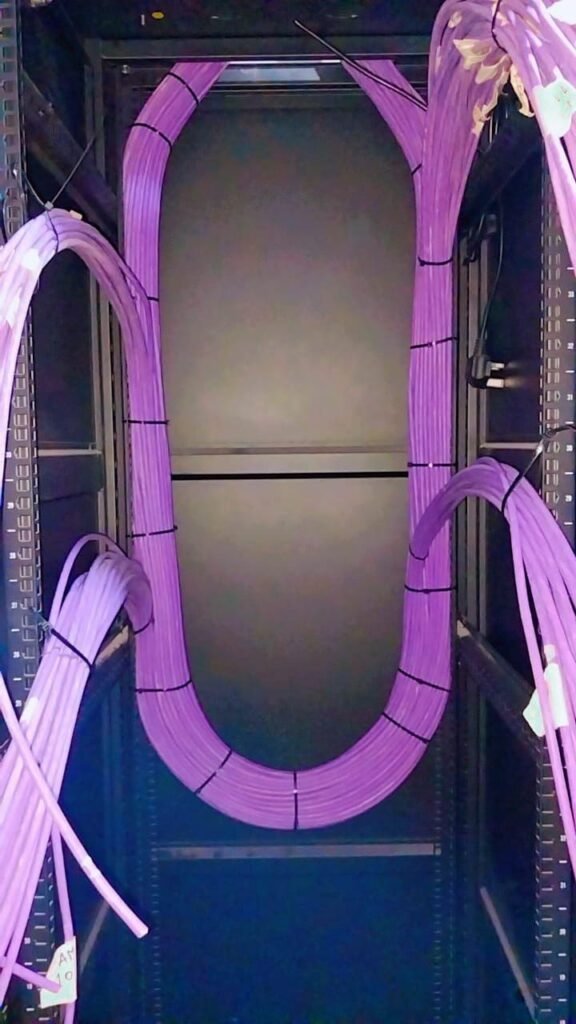
LAN network installation in Saudi Arabia usually ranges from SAR 5,000 to over SAR 80,000. The cost depends on the office size, cabling type, and switch setup. You also need to consider if you want Cat6, Cat6A, or fiber backbone integration. In Riyadh, most business installations take 3 to 10 working days. However, larger projects, like warehouses or hospitals, may need several weeks.
If you run a business in Riyadh, Jeddah, or Dammam, you need a good LAN network. This is true for fast-growing spots like King Abdullah Financial District, too. Bad network infrastructure leads to slow internet, CCTV lag, dropped VoIP calls, and expensive downtime.
I’ve spent 8 years working with office owners, warehouses, clinics, and retail businesses in Saudi Arabia. Many companies are surprised. The internet provider often isn’t the real issue. Internal cabling is.
This guide explains how LAN network installation works in Saudi Arabia. It includes pricing in SAR. It also covers common mistakes businesses make. Local regulations are discussed too. Plus, you’ll find tips for choosing the best setup for your building.
Shan is an IT infrastructure consultant. He has more than 8 years of experience. He specializes in network cabling, LAN deployment, and structured cabling systems. His work is based in Saudi Arabia. He has worked on office networking projects in Riyadh, Jeddah, and Dammam. He also has experience in industrial warehouse environments.
Specializations include:
LAN network installation builds the internal system for devices in a building. This setup lets them connect with each other and access the internet reliably.
That includes:
Think of it like the road system inside a city.
Your ISP connection is the highway entering the country. The LAN infrastructure is all the equipment in your office that moves data. It connects employees. It also links CCTV systems, printers, meeting rooms, VoIP phones, servers, and cloud platforms.
And honestly, this is where many Saudi businesses struggle.
I recently visited an office in Al Olaya, Riyadh. They had a high-speed fiber internet package from their provider but employees still complained constantly about slow connections and Zoom call drops. The issue wasn’t the internet package at all.
Their office was running on old Cat5 cabling installed nearly 12 years ago.
After upgrading to Cat6A cabling, they configured the switches. Their internal transfer speeds improved a lot. Support tickets dropped within days.
That’s why LAN infrastructure matters.
Especially in Saudi Arabia where:
And yes, heat actually affects network hardware performance more than most people realize.
A lot of small businesses try to save money by letting general electricians handle network cabling.
Bad idea.
Electrical wiring and network infrastructure are completely different disciplines.
I’ve seen offices in Jeddah where Ethernet cables were routed next to power cables without shielding. The result? Packet loss, unstable VoIP calls, and random disconnections during peak hours.
Professional LAN installation focuses on:
For Saudi businesses, there are also practical reasons to do this correctly from day one.
If you’re opening:
…your network infrastructure becomes part of daily operations immediately.
Poor infrastructure leads to:
And downtime in Saudi commercial environments isn’t cheap.
A warehouse client near the Eastern Province lost inventory tracking. This lasted almost six hours. The cause was unmanaged switches overheating in a rack without ventilation.
That single outage cost more than the entire network upgrade would have.
For complete structured cabling in Saudi Arabia visit this.
Most standard offices don’t need special government approval. LAN network installation is simple. But businesses still need to follow commercial infrastructure and safety requirements.
The main authorities businesses should know include:
Official Sources:
In commercial projects, like hospitals and towers, contractors must follow rules. This applies to industrial sites and government contracts too.
Since 2026, new commercial projects in Riyadh and NEOM require better paperwork. This is especially true for low-voltage infrastructure.
That includes:
I’ve helped many businesses make these documents. They needed them because past contractors disappeared. These contractors didn’t provide proper network records.
And trust me — trying to troubleshoot a network without documentation becomes a nightmare later.
Particularly in large buildings.
Another thing many businesses ignore?
Heat management.
Saudi commercial environments place extra stress on:
That’s why proper ventilation and rack planning matter much more here compared to cooler regions.
This is where everything starts.
A professional team visits your office, warehouse, clinic, or facility to analyze:
For a standard office in Riyadh, this usually takes 2-4 hours.
Most people underestimate future growth during this phase.
A company with 20 employees today may need space for 50 employees within two years. Planning only for current requirements creates expensive upgrade work later.
Once requirements are clear, the contractor designs:
This stage matters more than clients realize.
Good design reduces:
In warehouses, cable routing can get tricky. High shelves and machines often block the way.
And during summer months in Saudi Arabia, outdoor cable exposure requires additional protection.
This is the physical deployment phase.
Most modern Saudi office projects now use:
Installation includes:
Typical timelines:
During Ramadan, timelines often extend slightly because commercial working hours change.
Now the active hardware gets configured.
That includes:
This is usually where cheap contractors struggle.
Anyone can run cables.
Proper network segmentation and optimization require actual networking knowledge.
I’ve seen businesses with expensive hardware completely misconfigured.
An office near King Fahd Road had 1Gbps fiber internet. However, network loops in their switch setup led to huge packet loss every afternoon.
The fix took less than two hours.
Every cable should be tested.
Not randomly. Every single line.
Professional installers use certification tools to verify:
Businesses should always request:
If a contractor can’t provide these, that’s a red flag.
Finally, the system gets optimized based on real-world usage.
This includes:
Most network complaints happen after installation because optimization was skipped.
Especially in buildings with thick concrete walls.
Earlier this year, I worked with a marketing agency in Al Uraija, Riyadh.
Their biggest complaint was unstable internet during client meetings.
At first they blamed the ISP.
But after inspection, the real problems were:
The office had around 35 employees.
We upgraded the setup with:
Total project cost:
Approximately SAR 18,000.
Installation time:
5 working days.
Results after deployment:
What didn’t work initially?
The first WiFi placement plan left dead zones near meeting rooms because of reinforced concrete walls. We had to reposition two access points after live testing.
That happens sometimes. Real environments behave differently than floor plans.
Option
Best For
Average Cost
Speed Capability
Recommended For
Cat6
Small offices
SAR 5,000-15,000
Up to 1Gbps+
SMEs
Cat6A
Growing businesses
SAR 10,000-30,000
10Gbps
Medium enterprises
Fiber Backbone
Enterprise facilities
SAR 25,000+
Extremely high
Warehouses, hospitals
Works well for:
Affordable and reliable.
But future scalability becomes limited in larger environments.
This is what I recommend for most modern businesses in Saudi Arabia.
Especially companies planning growth.
Better shielding. Better performance. Better future-proofing.
It handles:
Best for:
Higher installation cost.
But unmatched performance over long distances.
Prices in Saudi Arabia vary heavily depending on:
As of 2026, typical pricing looks like this:
Project Type
Estimated Cost
Small Office
SAR 5,000-12,000
Medium Office
SAR 12,000-35,000
Warehouse
SAR 30,000-100,000+
Hospital/Enterprise
SAR 100,000+
Approximate USD conversion:
Be careful with extremely cheap quotations.
If someone offers a full office setup at a shockingly low price, they’re likely cutting corners on:
And you’ll pay for it later.
Most contractors in Saudi Arabia accept:
Electrical wiring knowledge doesn’t equal networking expertise.
This leads to interference problems and unstable infrastructure.
Businesses plan for today’s staff count instead of tomorrow’s expansion.
Then six months later they’re pulling new cables again.
Saudi heat destroys network hardware faster than people expect.
Especially in warehouses.
No cable maps. No labels. No testing reports.
Troubleshooting becomes painful later.
Consumer hardware isn’t designed for heavy commercial traffic.
Concrete walls and metal shelving create major dead zones.
Especially in older Riyadh buildings.
Businesses grow.
Adding extra network outlets during installation costs far less than reopening ceilings later.
Even small offices benefit from VLAN control and monitoring.
I can’t tell you how many hours businesses waste tracing unlabeled cables.
Saudi heat damages cheap outdoor Ethernet quickly.
Use proper conduit protection.
Commercial timelines often slow during Ramadan working hours.
One power fluctuation can bring down your entire office network.
Great for network simulation and planning.
Free for learning.
Official website: https://www.cisco.com
Excellent for SMB WiFi management.
Used widely across Saudi offices.
Industry-standard cable testing tools.
Professional-grade.
Expensive but reliable.
Official Saudi telecom authority.
Useful for compliance references.
International structured cabling standards.
LAN network installation creates a local area network. This can happen in offices, warehouses, clinics, or commercial buildings. It includes Ethernet cables, switches, WiFi systems, server racks, and setup. This lets devices communicate reliably.
Most small office LAN installations cost between SAR 5,000 and SAR 15,000. Medium businesses typically spend between SAR 15,000 and SAR 35,000. However, enterprise and warehouse projects can go over SAR 100,000. This depends on fiber integration and hardware needs.
Cat6 works well for small businesses with standard networking needs. Cat6A is better for growing offices, high-bandwidth applications, and future scalability. In most modern Saudi office projects, Cat6A has become the safer long-term investment.
Small offices typically take 2-4 working days. Medium offices might need one week. However, warehouses and hospitals can take several weeks due to their complexity and operational limits.
Yes. Poor-quality cables can slow down your network. Interference and damaged connectors also hurt performance. Bad switch settings make things worse. This can happen even if your ISP offers fast internet.
Not always.
Fiber makes sense for:
Most small businesses still perform well using Cat6A.
Concrete walls, metal shelves, and poor access point placement can cause WiFi dead zones. Interference also adds to the problem. Proper site surveys and coverage testing solve most of these issues.
Absolutely.
Without certification testing, businesses can’t check cable quality. They also can’t find hidden faults before issues arise later.
Saudi Arabia’s commercial infrastructure market is evolving fast.
Demand for high-performance internal networks is growing. Smart office projects are a big part of this. AI surveillance systems also drive the need. Plus, more businesses are using the cloud.
Projects tied to Vision 2030 focus on Riyadh and NEOM. They now want better documentation. They also need scalable infrastructure and improved low-voltage planning.
We’re also seeing:
Businesses that wait to upgrade old infrastructure are now feeling the impact on their operations.
Especially when cloud applications and AI tools become part of daily workflows.
If your office has slow connectivity, unstable WiFi, or CCTV lag, it needs help. Constant network complaints mean your internal setup needs attention.
Start with a professional network assessment.
For small offices, Cat6A with managed switching offers a great balance. It’s cost-effective and allows for future growth.
If you’re running:
And don’t choose contractors based only on the cheapest quotation.
Good network infrastructure lasts years.
Bad infrastructure creates years of frustration.
Need help planning a LAN network installation project in Riyadh, Jeddah, or anywhere in Saudi Arabia? Start with a proper site survey and infrastructure audit before purchasing hardware.
That single step prevents most expensive mistakes businesses make.
Get the latest updates via email. Any time you may unsubscribe.